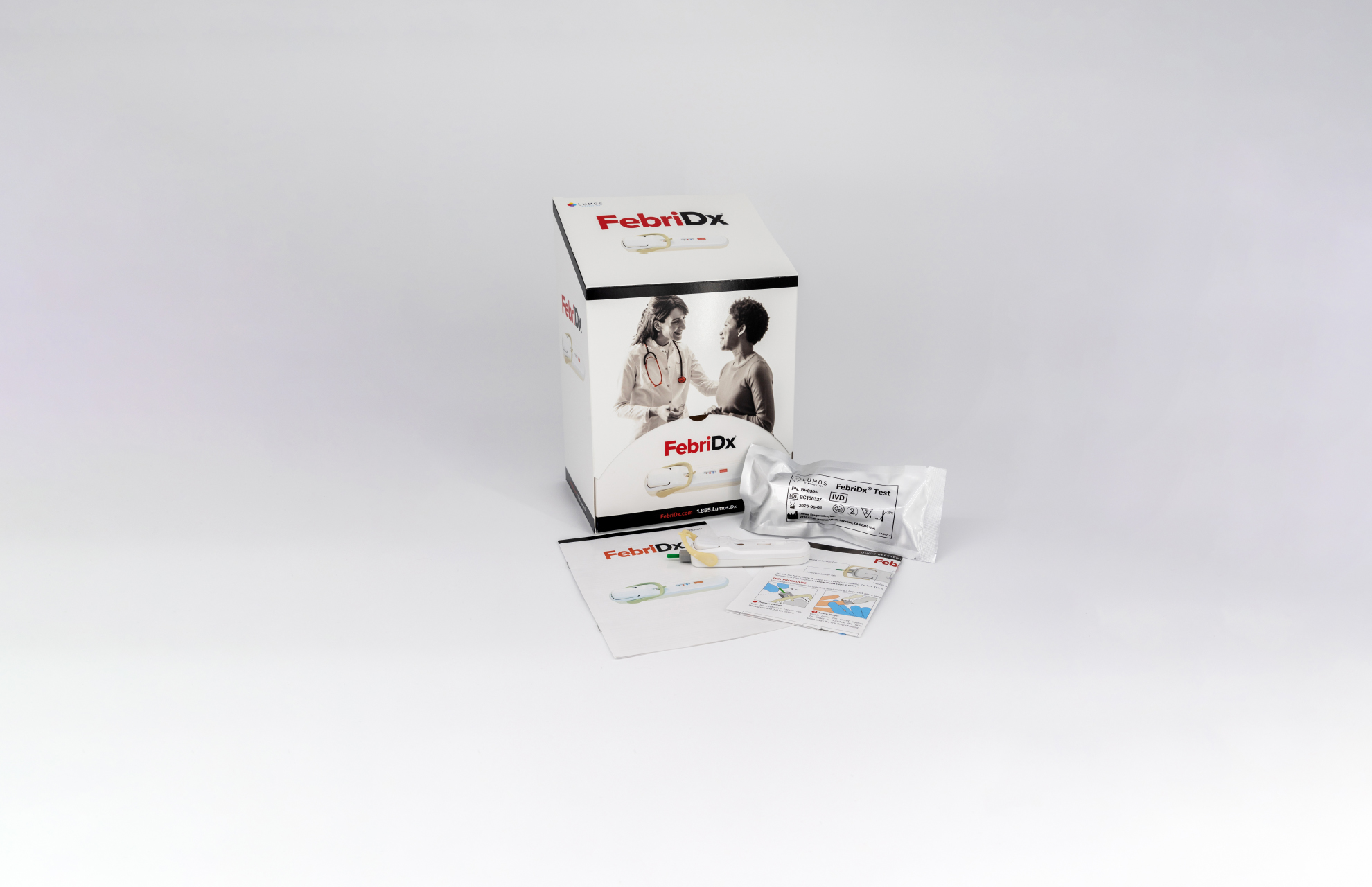
FebriDx US
Antimicrobial resistance
FebriDx can help reduce unnecessary antibiotics and risks.
Unnecessary use of antibiotics leads to antimicrobial resistance (AMR), causing more than 1.27 MILLION DEATHS globally1
Antimicrobial resistant infections cost $BILLIONS in the U.S. each year1
Acute respiratory infections and antibiotics
Acute respiratory infections, producing symptoms such as cough, sore throat, runny nose and congestion, are the most common reason patients seek care worldwide.2-4
The majority of acute respiratory infections are caused by viruses and do not require antibiotics, yet antibiotics are prescribed in up to 50% of cases.5 The overlapping symptoms of acute respiratory infections make it challenging for clinicians to differentiate bacterial from non-bacterial infections.
Implications of unnecessary antibiotic use
There are more than 200 million antibiotic prescriptions written each year in the outpatient setting, approximately 30-50% of which are unnecessary.5 Unnecessary antibiotic use leads to increased antibiotic resistance and increased costs.6
FebriDx can help
FebriDx is intended to be used in urgent and emergency care settings. FebriDx offers rapid, point-of-care results that aid in diagnosing a bacterial infection,7,8 which could have a direct impact on the spread of resistant bacteria.
Patient satisfaction
Patients often insist on antibiotics. Since most coughs, colds, sore throats, and runny noses are caused by non-bacterial infections, antibiotics can often be prescribed unnecessarily. FebriDx produces a tangible test result that can be shared with the patient, thereby improving patient satisfaction and confidence in their treatment recommendations.
With a 99% Negative Predictive Value,7,8 FebriDx can help rule out bacterial infection and prevent inappropriate antibiotic prescriptions.
- Centers for Disease Control and Prevention (CDC). National Infection & Death Estimates for Antimicrobial Resistance. Updated Dec 2021. Accessed Jan 2024, https://www.cdc.gov/drugresistance/national-estimates.html
- Harris AM, Hicks LA, Qaseem A. Appropriate antibiotic use for acute respiratory tract infection in adults: advice for high-value care from the American College of Physicians and the Centers for Disease Control and Prevention. Ann Intern Med. 2016;164(6):425-434.
- Centers for Disease Control and Prevention (CDC). National Ambulatory Medical Care Survey. National Center for Health Statistics. Updated December 30, 2021. Accessed Jan, 2024, https://www.cdc.gov/nchs/ahcd/about_ahcd.htm
- Renati S, Linder JA. Necessity of office visits for acute respiratory infections in primary care. Fam Pract. 2016;33(3):312-317.
- Centers for Disease Control and Prevention (CDC). Measuring Outpatient Antibiotic Prescribing. Updated Oct 2022. Accessed Jan 2024, https://www.cdc.gov/antibiotic-use/data/outpatient- prescribing/index.html
- Pulingam T, Parumasivam T, Gazzali AM, et al. Antimicrobial resistance: Prevalence, economic burden, mechanisms of resistance and strategies to overcome. Eur J Pharm Sci. 2022/03/01/ 2022;170:106103. doi:https://doi.org/10.1016/j.ejps.2021.106103
- Shapiro NI, Self WH, Rosen J, et al. A prospective, multi-centre US clinical trial to determine accuracy of FebriDx point-of-care testing for acute upper respiratory infections with and without a confirmed fever. Ann Med. Aug 2018;50(5):420-429. doi:10.1080/07853890.2018.1474002
- Shapiro NI, Filbin MR, Hou PC, et al. Diagnostic Accuracy of a Bacterial and Viral Biomarker Point-of-Care Test in the Outpatient Setting. JAMA Netw Open. Oct 3 2022;5(10):e2234588.doi:10.1001/jamanetworkopen.2022.34588